11. April 2018 · Comments Off on Amethyst- The February Birthstone · Categories: Amethyst, Gemstones, Uncategorized
Purple Amethyst Ring
Green Amethyst (Prasiolite) Ring

Amethyst Gemstone

Amethyst gets its name gets from the Greek “amethystos”, which signifies “not drunken”, as amethyst in ancient times was thought to avoid tipsiness. Amethyst hues run from light to dark purple, and the classic royal purple hues are most valued and respected. Its stunning purple shading may originate from traces measures of iron or manganese in its crystal lattice. Amethyst crystals can form into colossal impeccable precious gems. It’s also found inside geodes the around the globe. Because of the abundance of amethyst, the faceted gems used in jewelry are typically spotless and free of imperfections.

All through history, the purple, lilac, and lavender amethyst precious stone have been related to sovereignty. Amethyst is faceted into numerous cuts and is used as a part of all types of adornments including rings, accessories, studs, bracelets, and pendants. Necklaces made of faceted or tumbled beads can also be found.

The precious stones have additionally been utilized for an assortment of health conditions i.e. cell development and recovery due to their far infra-red radiations all through the ages. The low level of heat produced by amethyst precious stones may help give a feeling of calm to the body, potentially giving positive impacts to supporting a sound sleep cycle and mental dysfunction. Far-infrared radiation has been appeared to help blood course, especially microcirculation among the vessels in the skin.
19. November 2015 · Comments Off on Tip of the Day: Choosing a Gemstone Engagement Ring – Tip 13 – Consider Gemstone Hardness · Categories: Gemstone Engagement Rings, Sapphire, Uncategorized · Tags: ,

Tip #13– Considering Gemstone Hardness:

Another characteristic of gemstones that should be considered when selecting the right one for a gemstone engagement ring is the hardness of the gem. The Moh’s scale is a hardness scale that characterizes the scratch resistance of a gemstone by the ability of that gemstone to scratch another gemstone. All gemstones are given a rating on a scale from 1 to 10. 10 is the hardest and only a diamond has a rating of 10. Believe it or not, the only thing that can scratch a diamond is another diamond.

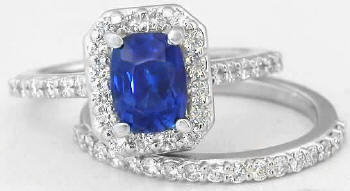
2.21 ctw Unheated Blue Sapphire and Diamond Ring in 14k

Beautiful example of a unheated/untreated sapphire engagement ring set from MyJewelrySource

Sapphires and rubies are the hardest gemstones with a Moh’s scale rating of 9 and so they do make excellent choices for an engagement ring, particularly if she has a very active lifestyle. The next hardest gemstones are blue topaz and aquamarine. Emeralds rate a 7.5 to 8 on the scale and are notably softer than their precious counterparts, ruby and sapphire. Some of the most popular gemstones are rated between a 6.5 and 7.5 on the Moh’s scale. These include amethyst, blue zircon, citrine, garnet, iolite, peridot, tanzanite and tourmaline. If you are concerned about the hardness (or lack thereof) of a gemstone that you would like in an engagement ring, there are a couple of things you can do to compensate for that hardness. Choosing rings with bezel or semi bezel set center stones is a great option for softer stones. The bezel helps to protect the stone from sudden impact and scratches. You can also look for a gemstone engagement ring with a lower profile. Rings that sit closer to the finger and rings that do not sit up high will also generally be a better choice for a softer gemstone.

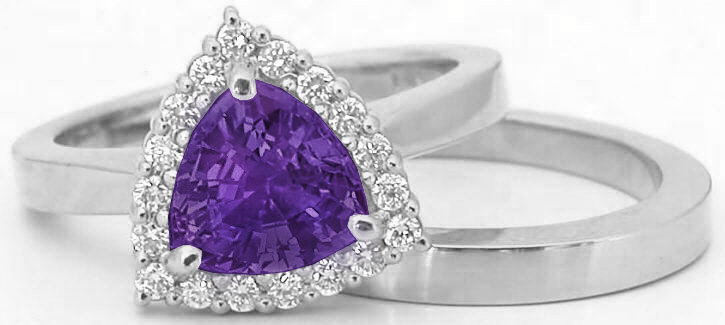
Unique 1.24 ctw Trillion Amethyst and Diamond Engagement Ring in 14k white gold

Example of Amethyst Engagement Ring set.

19. November 2015 · Comments Off on Tip of the Day: Choosing a Gemstone Engagement Ring – Tip 7 – Hues of Blue · Categories: Aquamarine, Blue Zircon, Gemstone Engagement Rings, Sapphire, Tanzanite, Uncategorized · Tags: , , ,

Tip #7- Hues of Blue: Blue is a soothing color and a symbol of commitment. It is a constant in our lives, from the color of the sky to the color of the ocean.


1.50 ctw Princess Cut Blue Sapphire and Diamond Ring in 14k

1.50 ctw Princess Cut Blue Sapphire and Diamond Ring from MyJewelrySource


Sapphires are the best choice for many reasons (including their superior hardness and range of colors) for a blue gemstone engagement ring. Other options include tanzanite, which also had purple tones, and aquamarine, a lighter, softer shade of blue, has been the focal point of many outstanding engagement rings we have created. If she likes sky blue or turquoise blue, don’t overlook blue topaz engagement rings and blue zircon engagement rings.

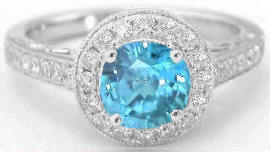
2.30 ctw Blue Zircon and Diamond Ring in 14k white gold

12.30 ctw Blue Zircon and Diamond Ring from MyJewelrySource


Did you know that blue zircon is one of the most sparkly gemstones? With a refractive index similar to that of a diamond, it is a brilliant beautiful stone. Blue zircon and Swiss blue topaz often look very similar. The highest quality of blue zircon has a color saturation that blue topaz does not have. Both are reminiscent of a gorgeous bright blue sky, or of the Caribbean sea.
 
Sapphires too can be very sparkly; this is particularly true of sapphires with Ceylon origin. At MyJewelrySource, we primarily offer Ceylon sapphire engagement rings for that very reason. Ceylon sapphires are found in a wide range of blue shades from periwinkle to cornflower to cobalt and royal blue. Sapphires from other locations like Africa or Thailand are also quite beautiful and generally have a richer, darker tone.

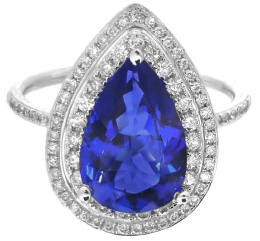
3.05 ctw Pear Shape Tanzanite and Diamond Ring in 14k

3.05 ctw Pear Shape Tanzanite Ring from MyJewelrySource


Tanzanite is found in only one location in the world, Tanzania, Africa. It is an exceptional bluish purple gemstone and is often found in large sizes. Lower quality material often is more of a lavender color, which is actually quite pretty. The lighter colors are more affordable and often times set in silver rather than precious gold or platinum.

Affordability:

Blue topaz is the most affordable of the blue gemstones with blue zircon following as a close second. Fine quality aquamarine, particularly the prized Santa Maria aquamarine, is very rare and is priced accordingly. Some qualities and colors of blue sapphire are very affordable especially in sizes of 1 carat or smaller. Fine, vivid cornflower blue Ceylon sapphires are among the most expensive, which reflects the rarity and the quality of the gem.


2.55 ctw Round Aquamarine and Diamond Ring in 14k

3.05 ctw Pear Shape Tanzanite Ring from MyJewelrySource

18. November 2015 · Comments Off on The Role of Gemstone Hardness in Selecting a Proper Cleaning Method · Categories: Gemstone Care, Uncategorized · Tags:
1.92 ctw Princess Cut Blue Sapphire and White Sapphire Ring in 14k white gold

With a hardness rating of 9, sapphires make an excellent choice for engagement rings or rings intended for everyday wear. Sapphires can be cleaned using most cleaning methods since they are tough and durable.

The hardness of the gemstones plays a role in what cleaning methods are appropriate for that gem. The Mohs scale of hardness will give you a lot of the information you need. Diamonds are the hardest gem with a Moh’s hardness rating of 10, followed by ruby and sapphire (hardness of 9), then topaz (hardness of 8), followed by aquamarine, tourmaline, emerald, and garnet (hardness of ~7.5), and then amethyst, citrine, iolite and zircon (hardness of 7). These gems are good choices for every day wear in terms of hardness, which is resistance to scratches. Extra care should be taken with gemstones with have a hardness rating under 7.0 since more every day items can scratch them. Gemstones that fall into this category are peridot, tanzanite, kunzite, and opaque gems like malachite, lapis lazuli, turquoise, opal and pearls.

Household dust generally has a hardness of 7, so if you were to use a cleaning cloth that had dust on it to clean your peridot, you could cause of light surface scratching. Metals such as gold and platinum have a hardness in the 3-4 range, and so they too can be scratched by a dusty cleaning cloth. Ever wonder why when you go to a jewelry store, they often show the jewelry on a soft pad? Besides the fact that it looks professional, it’s also because the glass countertop can actually scratch the softer gems like pearls.

Another issue that you may not have considered is that since gold and platinum are softer than most gemstones, a loose stone in a setting can actually slowly wear away at a prongs. So it is important to check your jewelry regularly to make sure the settings are secure.

MyJewelrySource.com recommends using lukewarm water and a soft toothbrush to clean your gemstones. You may also add a detergent-free soap as well. To clean out under the stones well, you can also use a pulsed water dental cleaning appliance. Finally, you can also use a lint/dust-free jewelry cleaning cloth to spruce up the metal mountings.